


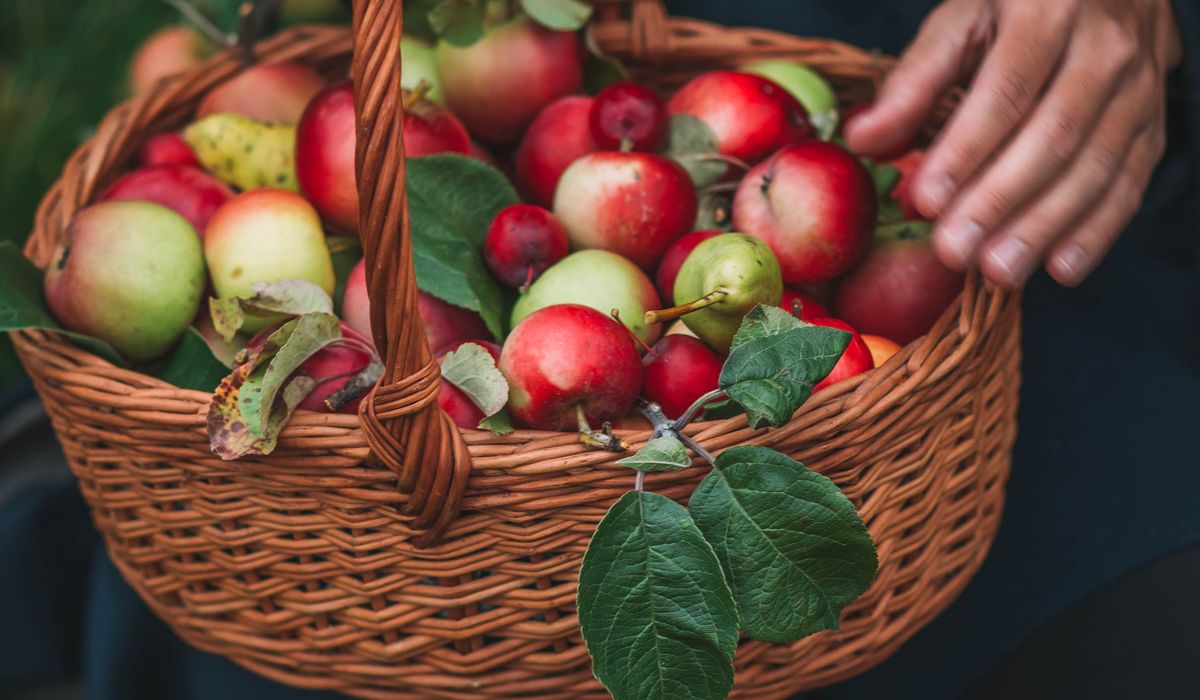
There's a particular kind of October afternoon that every forager knows: the low sun through half-bare branches, the smell of damp leaves, and the soft thud of an apple landing somewhere behind you. Old orchards are among the most rewarding places to forage in Britain, not because they're wild in any true sense, but because they were planted by someone else's great-grandparents and then largely forgotten.
Why Old Orchards Are Worth Seeking Out
Between the 1950s and the 1990s, the UK lost the majority of its traditional orchards — perhaps 60 per cent or more, depending on whose estimate you trust. What survives tends to be the awkward stuff: orchards tucked behind farm buildings, along the edges of allotments, beside old railway cuttings, or attached to houses that changed hands a dozen times. These are the trees worth finding.
A commercial orchard today grows a handful of varieties chosen for shelf life and uniformity. A Victorian or Edwardian orchard might grow twenty, each ripening at a different moment, each with a job — one for eating fresh in September, one for baking, one for cider, one that keeps in a barrel until March. That diversity is why foraging in these places feels less like scavenging and more like reading a library.
Look for gnarled trees with wide canopies in rough grass, often with mistletoe, woodpecker holes or lichen coating the bark. Rows are a giveaway. So is a boundary hedge that contains apple or pear suckers tangled among the hawthorn.
The Etiquette of Picking in Forgotten Places
Before you fill a bag, work out who owns the land. In England and Wales, picking fruit from someone else's tree without permission is technically theft, even on a public footpath — the footpath gives you the right to pass, not to harvest. Windfalls, though, are a greyer area that most land managers are relaxed about, as long as you're not damaging fences or trampling crops.
A few practical rules I follow:
- Ask first where you can. Parish councils, the local wildlife trust, and farmers who've put land into stewardship schemes are often happy to have fruit taken from derelict orchards — the alternative is wasps and rot.
- Take windfalls before tree fruit. Fruit from the ground is riper, sweeter and won't be missed.
- Never strip a tree. Leave at least half for birds, badgers, wasps and next year's seed.
- Avoid trees beside busy roads. Lead and tyre particulates settle on the skin; the fruit further into a field is cleaner.
- Check for spray notices. Still-farmed orchards sometimes get a late fungicide; a sign or a freshly mown headland is your clue.
Tasting Before You Decide
Never carry a whole bag home and then discover the fruit is mouth-puckeringly bitter. Taste one on site. Cut it across the middle — not top to bottom — so you can see the core shape and the pips.
Old varieties fall roughly into four flavour camps, though the lines blur:
- Sharp and bracing. High acid, low sugar — Bramley types, Golden Noble, Catshead. These are your cooking apples. They collapse beautifully into sauce and hold shape in a tart.
- Sweet and aromatic. Egremont Russet, Ashmead's Kernel, Ribston Pippin. Eat these fresh, sliced with cheese, or press them for juice.
- Bittersharp and bittersweet. Small, hard, tannic fruit — the cider apples. Inedible raw, superb fermented.
- Dual-purpose. The everyday workhorses: Blenheim Orange, Cox's Orange Pippin, Lord Derby. Good raw, good baked.
If a windfall tastes floury or soapy, it's over-ripe and only fit for sauce or the compost heap. If it tastes bitter and drying, it's a cider variety — set it aside in a separate bag.
What to Do With the Harvest
Sort your haul the moment you get home. One bruised apple will turn a whole crate in a week, so spread them in single layers in shallow boxes somewhere cool and dark — a shed, a garage, an unheated spare room. Check every few days and remove any that are going soft.
For eating apples, a cool larder will keep most varieties six to ten weeks; late keepers like Winston or Annie Elizabeth will go until February. Russets are the best keepers of all, thanks to that rough, dry skin.
For juicing, you don't need a press. A sturdy food processor and a clean muslin bag will do for small quantities: blitz, squeeze, chill, drink within a few days or freeze in bottles. Blend a sharp variety with a sweet one — a two-to-one ratio of eater to cooker gives a juice with backbone rather than syrup.
For cooking, sharp fruit goes in the pan with a splash of water and a lid, cooked gently until it collapses. A little sugar at the end, never at the start — you can always add, you can't take away. Windfalls make excellent apple butter, spiced and slow-cooked until dark, or chutney with onion, vinegar, mustard seed and a long simmer on a grey afternoon.
Cider apples can be scratted and pressed, or simply chopped and simmered into a syrup to use in place of sugar in baking. The tannins give a bitterness that balances sweet puddings surprisingly well.
Beyond the Fruit
Don't overlook the tree itself. Apple wood is superb for smoking — a handful of dry twigs over charcoal lends a sweet, faintly fruity note to pork or game. In early spring, before the buds break, you can tap a mature apple tree for sap, though yields are modest compared with birch or sycamore and the window is short; boiled down, it makes a delicate syrup worth trying once.
And the leaves? Young, soft apple leaves in May can be dried for a light herbal tea, faintly floral with a hint of the fruit to come. It's a modest pleasure, but on a cold February evening, a cup of last spring's apple leaf tea is a decent reminder of what's waiting in the orchard.


Leave a reply