


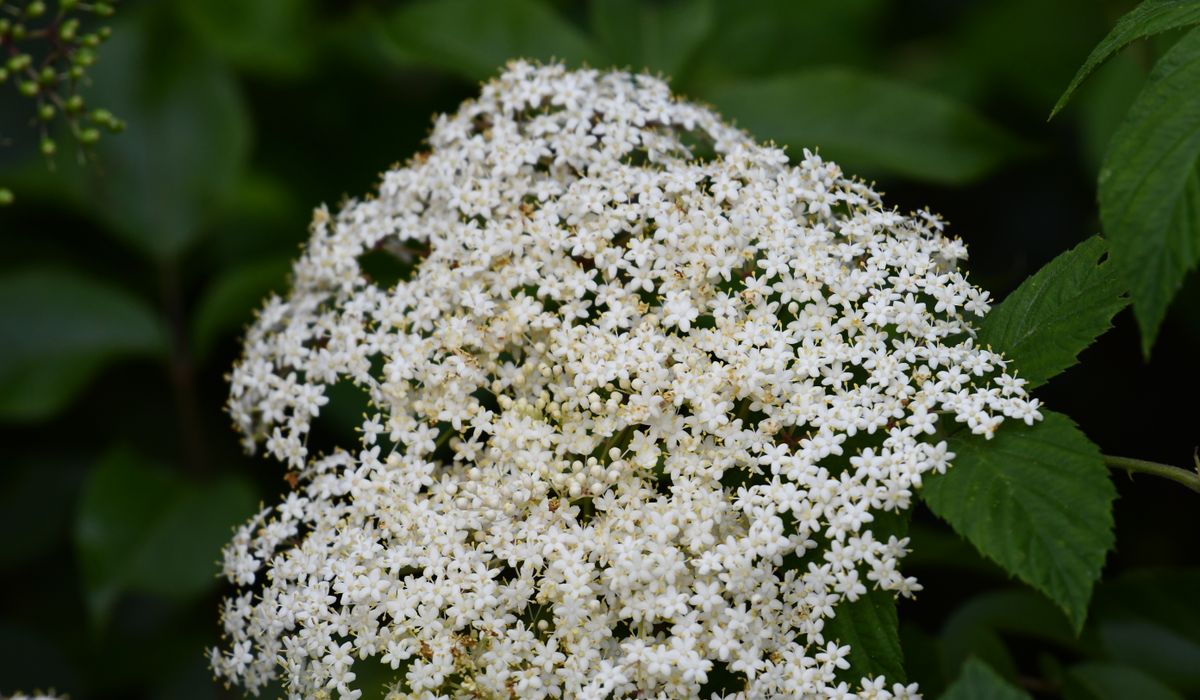
A Hedgerow Harvest Worth the Effort
By late August, the elder bushes that line our lanes and railway cuttings are bowed under flat-topped heads of small, dusty black berries. Elderberries are one of the most generous wild crops in Britain: easy to find, quick to pick, and the starting point for a cordial or syrup that will see you through the coughs and chills of January. The catch is that they must never be eaten raw. Treat them with a little care, though, and one afternoon's picking will fill your cupboard with something far better than anything you can buy.
Know Your Elder Before You Pick
Elder (Sambucus nigra) is a scrappy, opportunistic shrub, happiest in hedgerows, scrub, churchyards and the edges of car parks. Look for these markers:
- Heads of tiny berries hanging in heavy, drooping sprays, rather than standing upright.
- Berries that are near-black with a purple bloom, each one barely bigger than a peppercorn.
- Opposite, pinnate leaves with five to seven oval, serrated leaflets.
- Corky, deeply fissured bark on older stems, and a distinctly musty smell when a leaf is crushed.
The umbel shape is your best safety check. Deadly nightshade berries are single and glossy, dogwood berries sit in flat clusters with distinctive curved veins in the leaves, and privet berries are borne in upright spikes. If you are not completely certain, walk on. Never pick from busy roadside verges or anywhere that may have been sprayed.
Picking and Stripping the Berries
Go out on a dry afternoon once the heads are fully dark — usually from early September into October. Take a basket, a pair of scissors and gloves, because the juice stains badly. Snip whole heads into the basket rather than stripping berries in the field; it is far quicker and keeps your hands cleaner. Leave the unripe red and green berries behind, and always leave a good share for the birds.
At home, spread the heads on a tray and pull the berries off with a fork. A neater trick is to freeze the heads overnight: the berries then tumble off the stalks with a rub of your fingers. Discard every scrap of green stem, leaf and unripe berry — these carry the highest concentration of sambunigrin, the compound that makes elderberries unpleasant raw.
A Spiced Elderberry Cordial
This makes roughly a litre and a half of finished cordial.
- 1kg ripe elderberries, stripped
- 500ml water
- 1 cinnamon stick, 6 cloves, 1 star anise
- A thumb of ginger, sliced
- Pared zest and juice of one orange
- 500g sugar, or to taste
Tip the berries into a heavy pan with the water and spices. Bring to a gentle simmer and cook for 25 to 30 minutes, mashing occasionally with a potato masher, until the berries have collapsed and the liquid is deep purple. Do not boil hard; you want a slow, fragrant bubble. Strain through a muslin-lined sieve and leave it to drip overnight — squeezing the bag gives you more juice but also a rougher, more tannic drink. Measure the juice, return it to a clean pan with the sugar and orange juice, and heat gently until the sugar dissolves. Simmer for five minutes, skim, then pour hot into sterilised bottles.
Bottling, Storing and Using It
Sealed bottles will keep in a cool, dark cupboard for six months or more; once opened, refrigerate and use within a few weeks. For a thicker syrup, reduce the juice by a third before sweetening, or add a spoonful of honey off the heat. A tablespoon stirred into hot water with lemon makes a soothing winter drink, and the same cordial is excellent over ice with soda, or topped up with whisky on a cold evening. If you have rosehips or crab apples in the same basket, simmer them alongside for a mixed hedgerow cordial.
A Few Cautions Worth Repeating
Elderberries are safe only when thoroughly cooked. Raw or barely warmed berries, unripe fruit, and the leaves, bark, roots and sap of the elder are all best avoided, so keep children and pets away from the pan and never taste the mixture before it has simmered. Check your identification twice, pick only where you have permission, and wear old clothes. Do that, and this modest hedgerow shrub will reward you with one of the finest winter staples a forager can make.


Leave a reply