


Why Rowan Berries Are Worth the Bother
The rowan, or mountain ash, is one of the most generous trees in the British countryside. From September onwards its branches hang heavy with clusters of bright orange-red berries, glowing against the grey of an autumn sky. They are not, it must be said, pleasant to eat raw. Pop one in your mouth and you will be met with a dry, mealy texture and a bitterness that lingers unpleasantly on the tongue. That bitterness comes from parasorbic acid, a compound that diminishes with cooking, freezing or a good hard frost.
But cook them with apples and strain the result through a jelly bag, and you have one of the most beautiful preserves in the British larder: a clear, glowing amber jelly with a sharp, almost citrus-like tang. It is the traditional accompaniment to roast lamb, venison and game birds, and it holds its own on a cheese board next to a mature cheddar. Once you have made a batch, you will find yourself watching the rowans each autumn with a rather proprietorial eye.
Identifying Rowan and Picking It Well
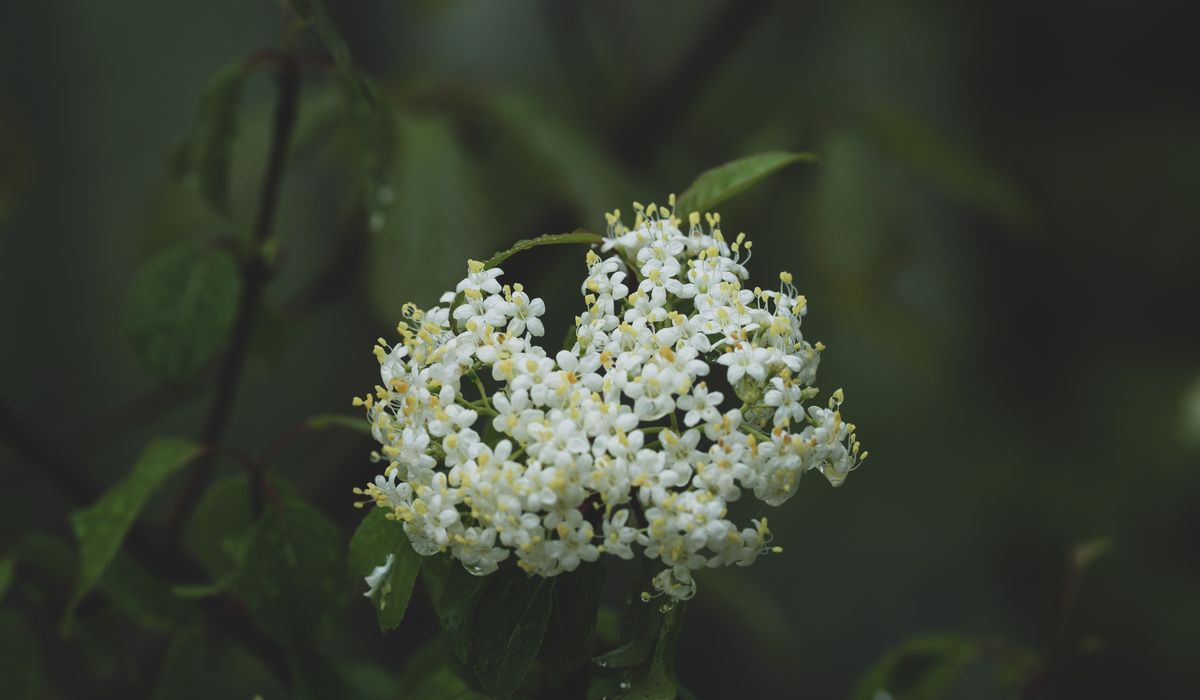
Rowan (Sorbus aucuparia) is a slender, graceful tree, common in Scotland, Wales, northern England and increasingly planted in towns as a street tree because of its tolerance of poor soil. Look for pinnate leaves — that is, leaves made up of pairs of small serrated leaflets arranged along a central stem, with a single leaflet at the tip. The bark is smooth and silvery-grey, and in spring the tree carries flat-topped clusters of creamy white flowers.
The berries are small, roughly the size of a pea, and grow in dense bunches. Ripe they are orange-red; unripe they are greenish or pale yellow. Pick only fully coloured berries, and pick from trees away from busy roads where exhaust residue settles on the fruit.
- Timing: traditionally after the first frost, which sweetens them. In practice, late September through November is the window, depending on where you are.
- No frost yet? Pick anyway and freeze the berries overnight — this achieves the same softening of flavour.
- Method: hold the cluster stem and strip the berries off with a fork or your fingers into a bag. A bucketful of clusters yields roughly 1kg of berries.
- Leave some behind: rowan is a vital autumn food source for redwings, fieldfares and blackbirds. Take a share, never the lot.
- Lookalikes: avoid whitebeam and the berries of wayfaring tree, which are unpalatable, and never pick from anything you cannot identify with certainty.
The Recipe: Rowan and Apple Jelly
You will need 1kg of picked rowan berries, 1kg of cooking apples, granulated sugar, and a lemon. Quantities of sugar are given below because jelly is made by volume of strained juice, not by weight of fruit.
- Rinse the berries and strip them from any remaining stalks. Do not bother to top and tail each one.
- Chop the apples roughly — skin, core and all. The pectin in the cores and skins is what sets your jelly, so keep them in.
- Tip fruit into a large preserving pan with 1.2 litres of water and the juice of one lemon. Bring to the boil, then simmer gently for 45 minutes until the fruit is completely collapsed and the liquid deeply coloured.
- Ladle into a scalded jelly bag suspended over a large bowl, or use a clean muslin square tied to the legs of an upturned stool. Let it drip overnight — do not squeeze the bag, or your jelly will be cloudy.
- Measure the strained juice. For every 500ml, allow 450g of granulated sugar. Warm the sugar in a low oven.
- Return juice to the cleaned pan, add the warmed sugar and stir over a low heat until dissolved. Then raise the heat and boil hard for 8–12 minutes.
- Test for set by dropping a spoonful onto a chilled saucer. Push it with your finger: if it wrinkles, it is ready. If not, boil two minutes more and test again.
- Skim off any scum, then pot into sterilised jars and seal while hot.
You should get four to five jars from this quantity. The jelly keeps for at least a year in a cool, dark cupboard, and the colour is quite startling — a clear garnet-amber that catches the light.
Beyond the Berries: Leaves, Sap and Bark
The berries are the headline act, but the tree offers other things to the curious forager. Young rowan leaves, picked in early spring when they are still soft and pale, have a pleasant, faintly bitter bite and can be chopped into salads or used sparingly in place of bay to flavour soups and stews.
Rowan sap can be tapped in late winter, much as birch is, though the yield is modest and the window narrow — a few weeks in February and early March, before the buds break. Drill a small hole, insert a clean tube into a container, and collect over a few days. The sap is faintly sweet and slightly astringent, best drunk fresh or reduced down into a syrup for drizzling over porridge. Always plug the hole with a whittled wooden bung afterwards, and never tap a young or struggling tree.
The bark has a long history in Highland medicine as an astringent, but it is best left alone — stripping bark damages the tree, and there is plenty of better medicine in the hedgerow.
Using Your Jelly
Rowan jelly is a cook's preserve rather than a toast-topper, though there is nothing wrong with either. Spoon it alongside roast venison, lamb or duck. Thin a tablespoon with red wine and a little stock to make a glossy pan sauce. Add it to a cheese board next to something sharp and crumbly. Or stir a spoonful into a vinaigrette for a salad of bitter leaves and walnuts, where its sourness cuts through the oil beautifully.
Make a batch this autumn. It is one of the simplest preserves going, and there is a particular satisfaction in turning a tree full of inedible berries into something that earns a place on the Christmas table.


Leave a reply